How amending an EHCP works when needs or provision change

Matt Bell
Amending an EHCP can feel confusing because families are often unsure whether they need an annual review, an emergency review, a reassessment, a phase transfer review or a direct request to the local authority. The key point is that an Education, Health and Care Plan (EHC plan or EHCP) should not remain static if the child or young person’s needs, provision or placement have changed.
This guide explains when an EHC plan may need to change, how amendments usually happen, and what families and professionals should look for before accepting a revised plan.
The short answer
Amending an EHCP means changing the wording of the EHC plan so that it better reflects the child or young person’s current needs, outcomes, provision or placement. Changes often happen after an annual review, during a phase transfer, after a reassessment, when a family moves local authority, or when the plan is clearly out of date. The most important thing is to check whether the amended plan is clear, specific and realistic enough to guide support in practice.
Why might an EHC plan need amending?
An EHC plan is meant to describe the child or young person as they are now, not as they were several years ago. Needs change. Provision changes. Schools and colleges change. Health, therapy and social care needs may also change over time.
An EHC plan may need amending when:
- the child or young person has made progress and outcomes need updating;
- the current support is not working;
- new needs have been identified;
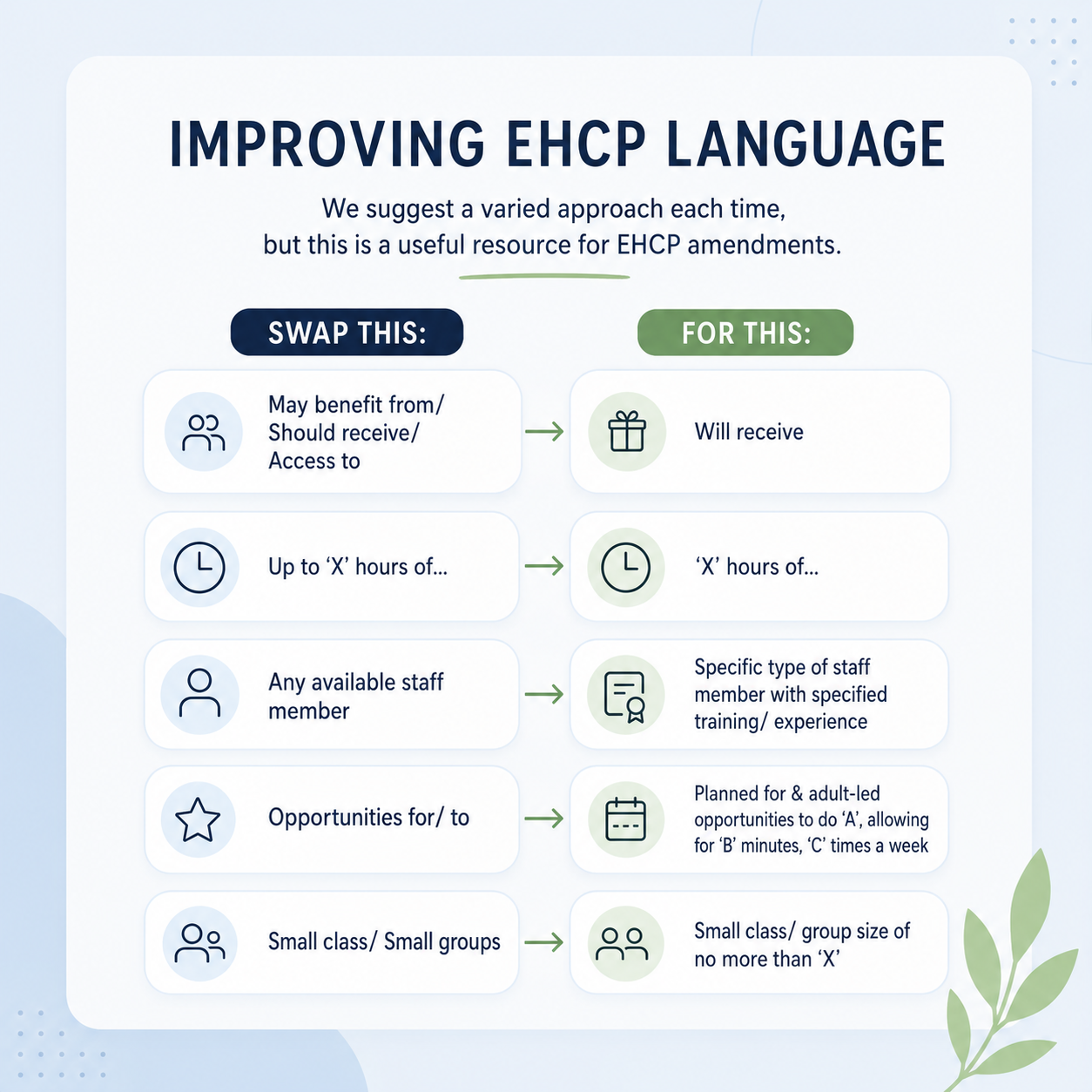
- the wording in the plan is too vague;
- provision is missing, reduced or no longer suitable;
- a school or college placement is changing;
- a phase transfer is approaching;
- the family has moved to a different local authority;
- health, therapy or social care advice has changed;
- the plan no longer matches what is happening day to day.
Families often notice the issue before the paperwork catches up. A child may be struggling with attendance, anxiety, learning, communication, behaviour, fatigue, sensory regulation or independence, while the EHC plan still describes an older or much narrower picture.
A useful starting question is:
“Does this plan still describe the child or young person accurately, and does it clearly say what support they now need?”
If the answer is no, amendment may need to be considered.
How annual review can lead to EHCP amendments
The annual review is the most common route for amending an EHC plan. Every EHC plan should be reviewed at least annually. This review should not be treated as a routine meeting or a paperwork exercise. It is a formal opportunity to consider whether the plan should stay the same, be amended, or come to an end.
A strong annual review should look at:
- progress towards the outcomes in the plan;
- whether the outcomes are still appropriate;
- whether the special educational provision is working;
- whether health and social care provision remains accurate;
- whether the placement is still suitable;
- what has changed since the last review;
- what needs to change for the next stage.
After the review meeting, the local authority should make a decision. It may decide to maintain the plan as it is, amend the plan, or cease to maintain it. If it decides to amend, it should send proposed amendments and give the parent or young person an opportunity to comment.
This is where families need to be careful. Sometimes the issue is not whether the local authority agrees to amend the plan, but whether the proposed amendments are good enough. A plan can be changed but still remain vague, incomplete or difficult to implement.
For example, “support as needed” is not as helpful as wording that explains what support will be provided, how often, by whom, and for what purpose. If an EHC plan is amended, the aim should be to make it more useful, not simply longer.
Can an EHC plan be changed outside annual review?
Families often assume they must wait until the next annual review before asking for changes. In some cases, waiting may be fine. In other cases, the issue may be too important or urgent to leave until the next scheduled review.
An EHC plan may need attention outside the usual annual review cycle if there has been a significant change. This might include a placement breaking down, a child being unable to attend school, a new professional report, a change in health needs, a serious concern about provision, or evidence that the plan no longer reflects the current situation.
Sometimes the best route is to ask the local authority to bring forward the annual review. Sometimes a reassessment may be needed because the existing information is too out of date or incomplete. Sometimes the issue can be handled through proposed amendments to the plan.
The important point is to describe the problem clearly. Instead of simply saying, “The EHCP needs changing,” it is usually better to say:
“The current EHC plan no longer reflects the child’s needs because…” “The provision in Section F does not match the support now required because…” “The current placement is no longer able to deliver the provision because…” “We are requesting an urgent review because…”
This helps move the conversation from general concern to a specific decision.
What happens during phase transfer?
Phase transfer is one of the most important times to review and amend an EHC plan. This is when a child or young person moves between stages of education, such as nursery to school, infant to junior, primary to secondary, or secondary to post-16 education.
Phase transfer matters because the next setting may need a very different kind of support. A child moving to secondary school may face larger buildings, more transitions, new routines, more teachers, increased homework, greater social complexity and more independence. A young person moving to further education may need support with course choice, travel, personal organisation, communication, employability, independence and preparation for adulthood.
The EHC plan should be reviewed and amended in time for proper planning. For many phase transfers, the final amended plan should be issued by 15 February in the year of transfer. For transfers from secondary school to a post-16 institution, the key date is usually 31 March.
These dates matter because late amendments can leave families with very little time to plan, visit settings, challenge decisions or prepare the child or young person for change. Phase transfer should therefore be treated as a strategic review point, not a last-minute placement exercise.
A good phase transfer review asks:
- What will change in the next setting?
- What support will need to continue?
- What new support will be needed?
- Does the plan describe preparation for adulthood where relevant?
- Is the named placement able to deliver the provision?
- Is the child or young person being prepared for the transition?
What if a family moves to a new local authority?
Moving to a different local authority can make families feel that the EHC plan is suddenly uncertain. The new authority takes over responsibility for maintaining the plan, but it may want to review it and may have different local provision options.
The key practical issue is continuity. Families need to know who is responsible, whether the current placement can continue, whether the plan will be reviewed, and whether any provision will change.
Before or shortly after a move, it helps to gather:
- the current final EHC plan;
- the most recent annual review paperwork;
- professional reports;
- evidence of current provision;
- details of the current setting;
- any concerns about what is not being delivered;
- information about possible schools or colleges in the new area.
The plan should not simply disappear because a family moves. However, the move can create practical problems if the new local authority interprets the plan differently, cannot access the same providers, or wants to consider another placement. This is another reason why clear wording in the plan matters.
Why EHCP amendments can be difficult in practice
Amending an EHCP sounds straightforward, but in practice it can be one of the most difficult parts of the SEND process. Families may be told that a review has happened, but not receive a clear decision. Proposed amendments may arrive late. The plan may be changed without fully reflecting professional advice. Or the amended wording may still be too vague to secure support.
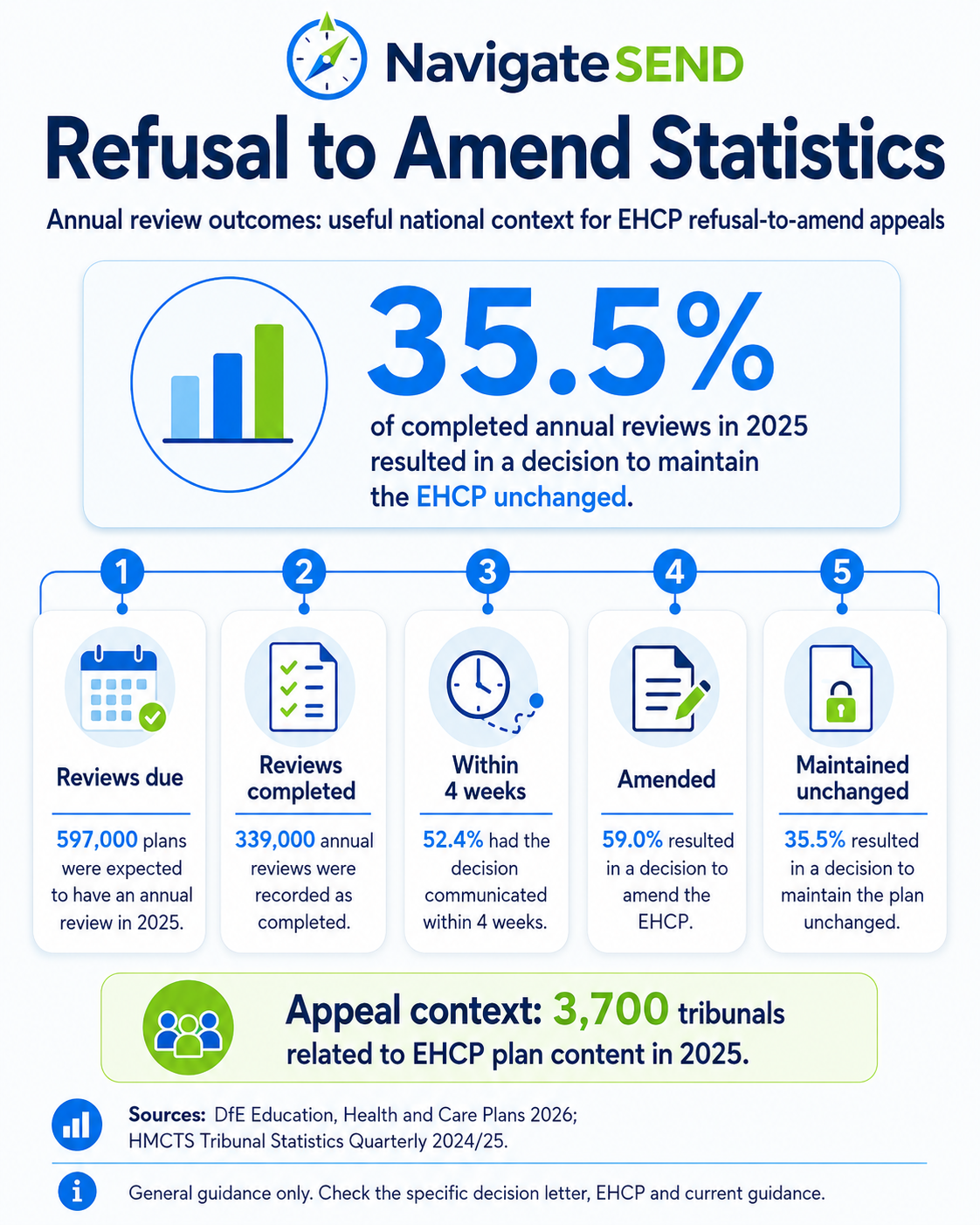
National data shows that amendment after annual review is common. In 2024, almost half of recorded annual review outcomes led to a decision to amend the plan. However, the same data also shows that timely decision-making remains a difficulty, with fewer than half of recorded annual review outcomes notified within four weeks.
Recent Ombudsman reports have also highlighted real problems with annual reviews and EHC plan processes, including delays, poor communication, and cases where families were told reviews had taken place when they had not. These examples matter because annual review is often the gateway to getting an outdated plan corrected.
The wider SEND system is also under pressure. Rising numbers of EHC plans, limited specialist capacity and local authority financial pressures can all affect how quickly plans are reviewed, amended and implemented.
This does not mean families should accept vague or outdated plans. It means the evidence needs to be organised, the requested changes need to be clear, and the family should keep track of what decision has actually been made.
What should families check before agreeing to amendments?
Before responding to proposed amendments, families should read the whole plan carefully. Changes in one section can affect another.
Check whether:
- the description of needs is current and accurate;
- outcomes are meaningful and not too vague;
- special educational provision is specific enough;
- therapy, health or social care input is described correctly;
- the placement section matches the requested or agreed setting;
- preparation for adulthood is covered where relevant;
- old wording has not been left in by mistake;
- professional advice has been reflected properly;
- the plan says who will do what, how often and for what purpose.
It is also important to look for missing detail. A plan may say that a child needs emotional regulation support, but not say what that support is. It may mention speech and language needs, but not specify therapy input. It may refer to adult support, but not explain the level, context or purpose of that support.
A practical response might say:
“We agree that the EHC plan needs to be amended, but we do not agree that the proposed wording is sufficiently clear. Please amend Section B to reflect the updated needs described in the occupational therapy report, and amend Section F to specify the provision required, including frequency, duration and who will deliver it.”
This keeps the response focused on accuracy and implementation.
Questions families often ask
Can an EHCP be amended before the annual review?
Yes. An EHC plan can be changed outside the annual review process where this is needed. In practice, families may ask the local authority to bring forward the review, consider amendments, or consider whether a reassessment is required.
What happens after an annual review?
After the annual review meeting, the local authority should decide whether to keep the plan unchanged, amend it, or cease to maintain it. If it proposes amendments, parents or the young person should be given the opportunity to comment before the final amended plan is issued.
How long should EHCP amendments take?
Where the local authority sends proposed amendments, families or the young person should have time to respond, and the local authority should then issue a final amended plan or decide not to proceed within the required timeframe. Delays can happen, so it is important to keep a written record of dates and decisions.
Can the placement be changed during an amendment?
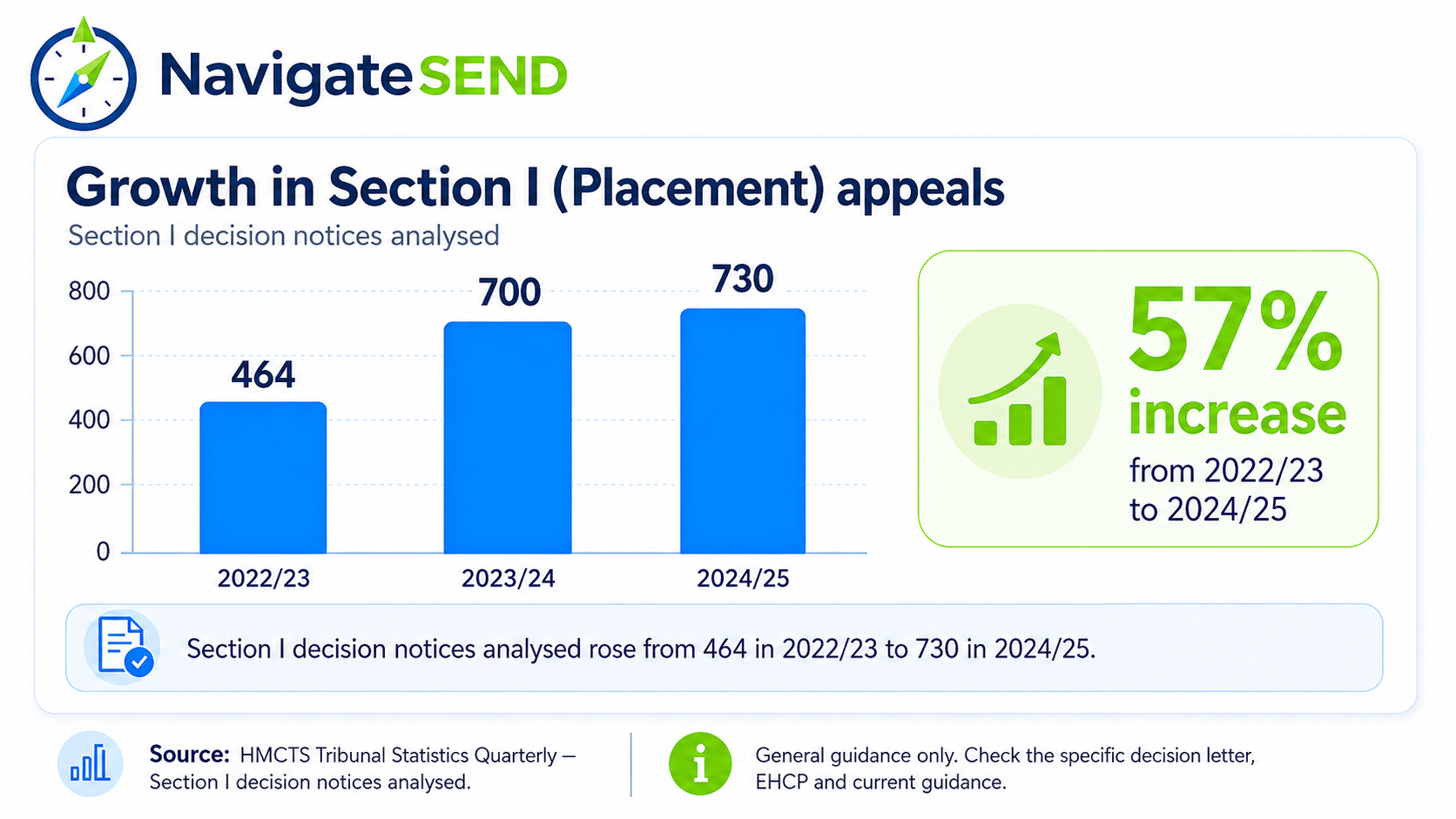
Yes. Placement can be considered during amendment, especially after annual review, phase transfer or a significant change in circumstances. Families should make sure the placement named in Section I matches the needs and provision described elsewhere in the plan.
What if the amended EHCP is still wrong?
If the final amended plan is still inaccurate, vague or missing important provision, families may need to consider next steps. The right route depends on the decision made, the sections in dispute and the evidence available.
Next step
If an existing EHC plan no longer reflects the real picture, NavigateSEND can help you identify what needs to change, organise the evidence and prepare a clear response to proposed amendments.