How the Mental Capacity Act applies to SEND, education, health and care

Matt Bell
Mental Capacity Act SEND questions are becoming more common because young people with Education, Health and Care Plans (EHCPs) often move through education, health and care systems at the same time. Families may be unsure who makes decisions after 16, whether parents still have a role, and how capacity should be considered when a young person has complex needs.
This guide explains what the Mental Capacity Act 2005 (MCA) means in SEND, how it interacts with EHCPs, and how Navigate SEND helps families and professionals make sense of decision-making across education, health and care.
The short answer
The Mental Capacity Act applies to people aged 16 and over. In SEND, it matters because many rights under the Children and Families Act 2014 pass to the young person after compulsory school age. A young person should be assumed to have capacity unless shown otherwise, and capacity must be assessed for the specific decision at the specific time. If a young person lacks capacity for a SEND decision, parents or a representative may usually need to support or make that decision in the young person’s best interests.
The key point is that capacity is not all-or-nothing. A young person may be able to make some education, health or care decisions but need support or representation for others.
Why MCA and SEND cause confusion
The confusion usually starts around age 16.
Before this point, parents usually exercise SEND rights on behalf of a child. After compulsory school age, many rights shift to the young person. This includes important decisions about requesting an EHC needs assessment, responding to a draft EHCP, asking for a particular school or college, requesting mediation, and appealing to the SEND Tribunal.
That shift is important because the SEND system is designed to increase young people’s participation, voice and control. However, it can become difficult where the young person has learning difficulties, autism, brain injury, mental health needs, communication difficulties, fluctuating capacity, or complex health and social care needs.
Families may hear different things from different professionals:
- “They are over 16, so only they can decide.”
- “Parents cannot speak for them now.”
- “They have an EHCP, so they must lack capacity.”
- “They can talk clearly, so they must have capacity.”
- “They made a risky choice, so they cannot understand.”
- “Health and education decisions are completely separate.”
All of these can be misleading. The MCA requires a more careful approach. The question is not simply age, diagnosis, behaviour or whether parents are involved. The question is whether the young person can make this specific decision, with support, at the time the decision needs to be made.
What does the Mental Capacity Act actually say?
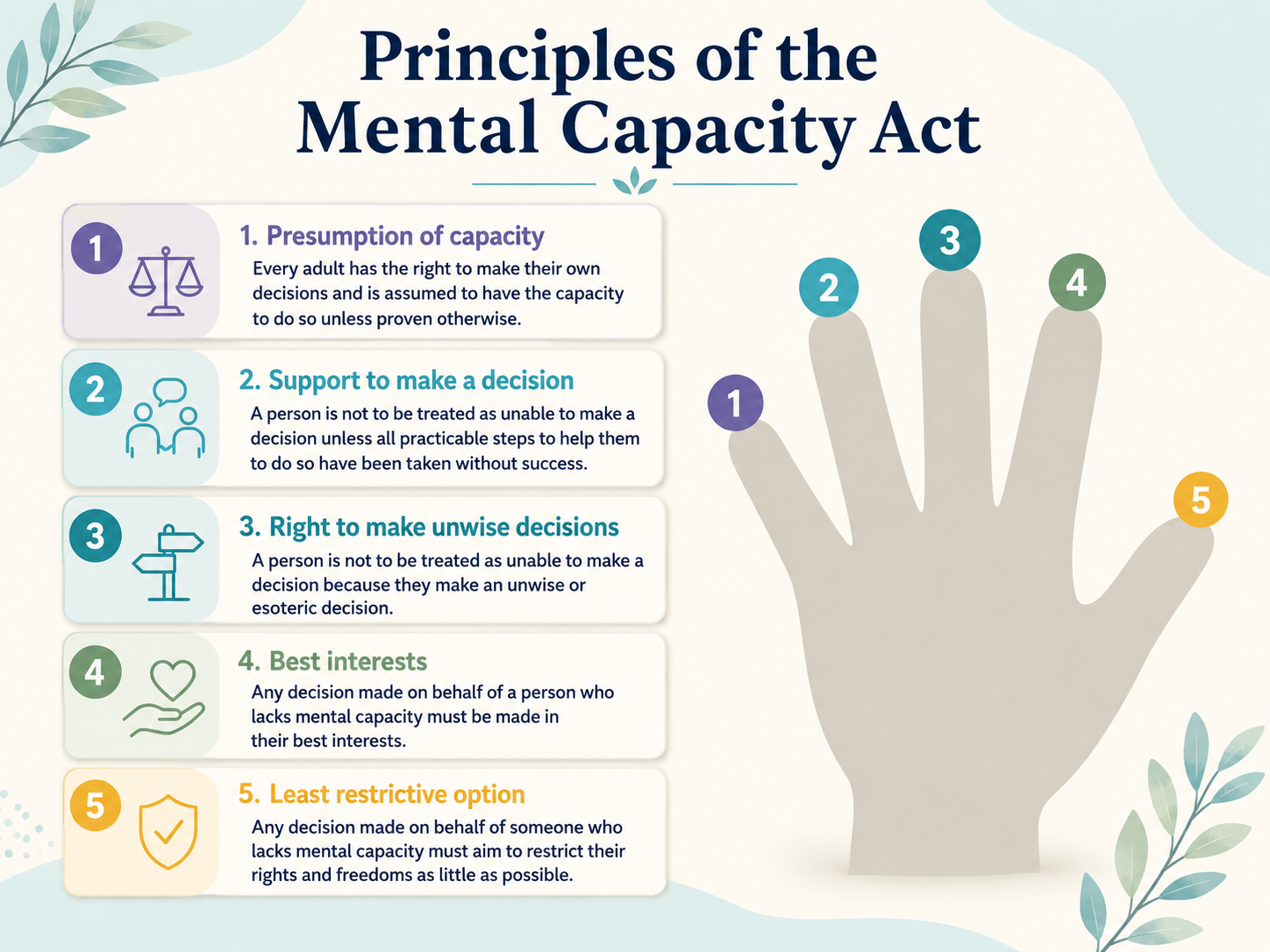
The Mental Capacity Act is built around five core principles.
First, a person must be assumed to have capacity unless it is established that they lack capacity. This means professionals should not start from the assumption that a young person cannot decide simply because they have SEND, an EHCP, a disability or a diagnosis.
Second, a person should not be treated as unable to make a decision unless all practicable steps have been taken to support them. In SEND, this might mean using accessible information, visual support, communication aids, extra processing time, familiar adults, reduced language load, or breaking a decision down into smaller parts.
Third, a person should not be treated as unable to make a decision just because they make an unwise decision. Young people are allowed to have views that adults disagree with. Disagreement does not automatically mean lack of capacity.
Fourth, any decision made for someone who lacks capacity must be made in their best interests.
Fifth, before making a decision or acting for someone who lacks capacity, people should consider whether the same purpose can be achieved in a less restrictive way.
In practical terms, the MCA is not about taking control away from young people. It is about supporting decision-making wherever possible and protecting people where they genuinely cannot make the decision themselves.
Capacity is decision-specific
One of the biggest misunderstandings is the idea that a young person either “has capacity” or “lacks capacity” generally.
That is not how the MCA works. Capacity is decision-specific.
A young person might have capacity to choose what course they want to study but not understand the long-term implications of ceasing an EHCP. They might understand whether they like a college but not be able to weigh the difference between two placements, support packages or appeal options. They might be able to consent to some health appointments but not manage a complex decision about direct payments or residential provision.
In SEND, capacity may need to be considered for decisions such as:
- requesting an EHC needs assessment;
- agreeing or disagreeing with an EHCP;
- choosing a school, college or placement;
- deciding whether to appeal;
- participating in mediation;
- agreeing to personal budgets or direct payments;
- consenting to information sharing;
- engaging with health or therapy input;
- making decisions about preparation for adulthood;
- deciding whether education or training should continue.
A young person is unable to make a decision if, because of an impairment or disturbance in the functioning of the mind or brain, they cannot understand, retain, use or weigh the relevant information, or communicate their decision.
This means capacity decisions should be practical and evidence-based. The focus should be on the decision itself, what information the young person needs, how it has been explained, and what support has been provided to help them participate.
How does MCA affect EHCP decisions after 16?
After compulsory school age, SEND rights generally belong to the young person rather than the parent. This is a key part of the Children and Families Act 2014 framework.
However, the SEND system also recognises that some young people may lack capacity to exercise those rights. Where a young person lacks capacity, decisions may need to be taken by a representative or, in many practical situations, by the parent acting in the young person’s best interests.
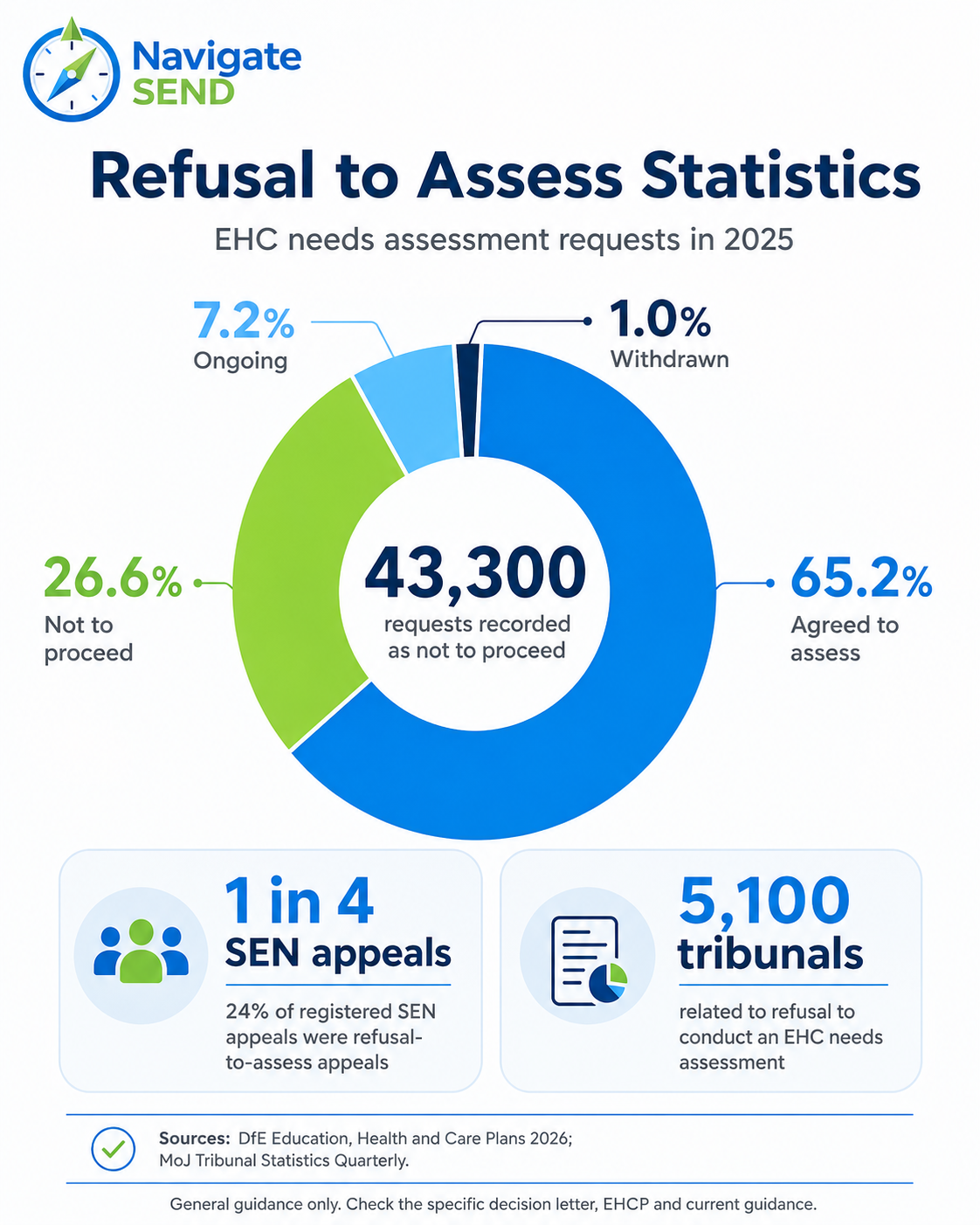
This can apply to major EHCP decisions. For example, if a young person lacks capacity to decide whether to request an assessment, whether to appeal a refusal, or what placement to request, adults may need to help ensure the young person’s rights are not lost simply because they cannot navigate the process independently.
This is especially important because SEND timelines can be tight. Missing a mediation certificate deadline, appeal deadline or consultation window can have significant consequences. Where capacity is unclear, families should not leave the issue unresolved. They should ask the local authority or relevant professional to clarify how the young person will be supported to participate, and who will act if the young person lacks capacity for the specific decision.
How does MCA connect with health and care?
MCA issues often become more complicated when education, health and social care overlap.
A young person with an EHCP may also have health needs, therapy input, medication decisions, personal care needs, social care assessments, continuing care, or adult care transitions. Different teams may use different language and may approach capacity in different ways.
This can create confusion. A young person may have capacity for one health decision but not another. They may lack capacity for a particular care decision but still be able to express clear wishes about education. They may need advocacy, communication support or best-interests decision-making.
Where a young person lacks capacity and has no appropriate family or friends to consult for certain serious medical treatment or accommodation decisions, an Independent Mental Capacity Advocate may be relevant. In many SEND cases, parents remain closely involved, but professionals still need to understand when advocacy, best-interests processes or Court of Protection routes may be needed.
For families, the practical issue is often coordination. Education, health and care decisions should not be made in isolation where each one affects the other. For example, a college placement may not be workable without personal care support, transport, therapy, medical planning or social care input. A health or care decision may affect whether the young person can access education at all.
What current public issues make this important?
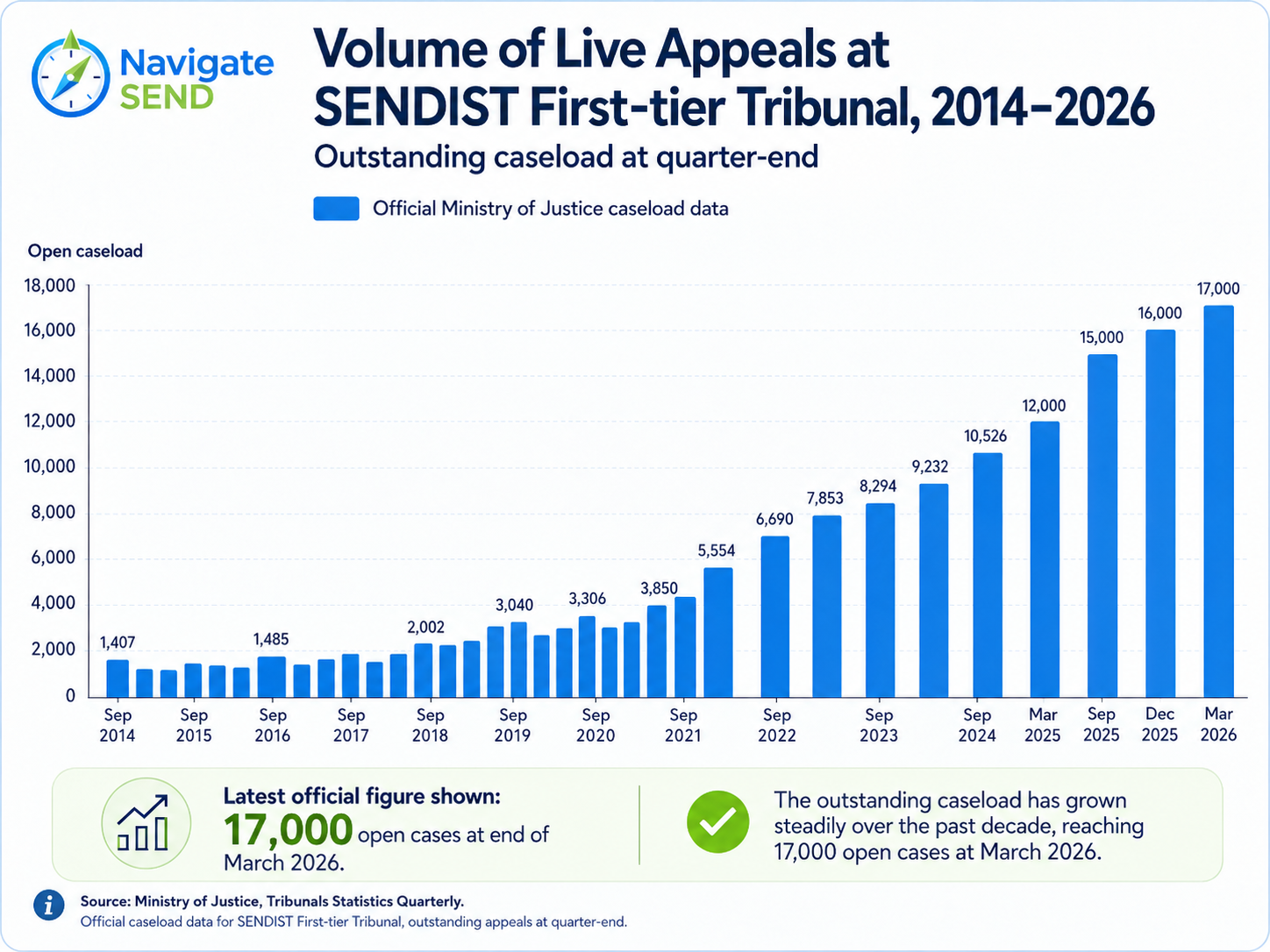
The wider SEND system is under significant pressure, alongside ongoing government reform proposals. Recent national reports have highlighted rising EHCP numbers, long waits, disputes, inconsistent provision, pressure on local authorities, and families struggling to secure support. This matters because capacity decisions can be overlooked when systems are stretched.
There are three public issues that make MCA and SEND especially important.
First, post-16 and post-19 SEND is growing more complex. More young people are remaining in education or training with EHCPs, and decisions about college, supported internships, therapies, social care, transport and independent living are often interconnected.
Second, family involvement can become unclear after 16. Some families are wrongly shut out of discussions because the young person is over compulsory school age. Others may unintentionally speak over a young person who could make the decision with the right support. The right balance is usually not “parents decide everything” or “parents are excluded”. It is supported decision-making, with best-interests decisions where capacity is lacking.
Third, dispute routes can be hard to navigate. Decisions about EHCPs, health, social care, transport, provision and placement may have different processes. If capacity is unclear, families may struggle to know who can request, appeal, complain or consent.
This is why capacity should be considered early and clearly, not only when there is a crisis.
What should families and professionals do in practice?
A helpful starting point is to separate the decision from the diagnosis.
Instead of asking, “Does this young person have capacity?”, ask:
“What is the specific decision that needs to be made?”
Then ask:
- What information does the young person need to understand?
- Has that information been explained accessibly?
- Can the young person retain the key information long enough to decide?
- Can they use or weigh the information?
- Can they communicate a decision in any way?
- What support has been offered?
- Is capacity fluctuating?
- What are the consequences of deciding or not deciding?
- Who is best placed to support the young person?
- Is a best-interests decision needed?
Families should also keep records. Where capacity is an issue, it helps to note what was discussed, what support was used, what the young person said, and why a particular conclusion was reached.
Professionals should avoid global statements such as “lacks capacity” without saying for what decision. Families should ask for clarity if wording is vague.
How Navigate SEND supports families with MCA and SEND
Navigate SEND helps families and professionals make sense of MCA and SEND where education, health and care decisions overlap.
We can help by:
- identifying which SEND decision is being made;
- clarifying whether the young person’s rights have shifted after 16;
- helping families prepare for EHCP meetings where capacity is relevant;
- organising evidence about communication, understanding and decision-making;
- helping families ask clear questions about supported decision-making;
- mapping education, health and social care responsibilities;
- supporting preparation for annual reviews, phase transfer, EHCP amendments or post-16 planning;
- helping families respond where they have been excluded from discussions;
- helping professionals keep the young person’s voice central;
- identifying when further specialist advice may be needed.
In practice, families often need a clear route through complexity. The aim is not to remove the young person’s voice. It is to make sure the young person is heard, supported and protected, and that important SEND rights are not lost because the decision-making process was unclear.
Questions families often ask
Does the Mental Capacity Act apply to children under 16?
The Mental Capacity Act generally applies to people aged 16 and over. For children under 16, decision-making usually sits within parental responsibility and other child law frameworks.
Does having an EHCP mean a young person lacks capacity?
No. An EHCP does not mean a young person lacks capacity. Capacity must be assessed for the specific decision, at the specific time, and the young person should be supported to decide wherever possible.
Can parents still be involved after a young person turns 16?
Yes. Parents can still be involved, especially where the young person wants support or lacks capacity for a specific decision. The young person’s voice should remain central, but families should not be excluded automatically.
What if a young person disagrees with their parents?
Disagreement does not automatically mean the young person lacks capacity. The question is whether they can understand, retain, use or weigh the relevant information and communicate their decision.
Can Navigate SEND help with MCA and EHCP decisions?
Yes. Navigate SEND can help clarify the decision, organise the evidence, prepare for meetings and identify whether the issue is about capacity, SEND rights, EHCP provision, health, social care or a combination of these.
Next step
If mental capacity, post-16 decision-making or education, health and care responsibilities are unclear, Navigate SEND can help you organise the situation and identify the strongest next step.